Day Trip: Lisbon to Nazaré (Best Viewpoints + What to Do)
Nazaré is famous for giant waves, but it's worth visiting even without surf season. Here's how to plan a day trip from Lisbon with the best viewpoints and a relaxed pace.

Jolie Dang
Founder, Jolie in Lisbon
Nazaré is one of the most dramatic places on the Portuguese coast - a cliff-top village above a wide beach town, famous for the largest waves ever surfed on the planet. Even if you visit in July with the sea calm and blue, the geography alone is worth the trip: the funicular up to Sítio, the views from the clifftop, the wide stretch of beach below. From Lisbon it's about 2 hours, and it makes for one of the most memorable day trips you can do.
Why Nazaré Is Worth the Journey
Most people have heard of Nazaré from surf documentaries - it's where Garrett McNamara rode a 78-foot wave in 2011 and put the town on the global map. But Nazaré is more than one famous beach. The town has two distinct parts:
- A Praia (The Beach Town Below): The main beach, the seafront promenade, the restaurants, and the market. Classic Portuguese fishing-town energy - brightly painted buildings, dried fish hanging outside shops, elderly women still wearing traditional seven-layer skirts
- O Sítio (The Clifftop Village Above): The original settlement on the plateau, reached by a historic funicular. Incredible viewpoints over the bay, a small pilgrimage church, and the lighthouse at Praia do Norte
Even without big waves, the scale of the place is impressive. The main beach at Nazaré is one of the widest in Portugal - enormous even in summer. And from the Sítio viewpoint, looking down at the town and the ocean curving out to the horizon, you understand immediately why people have lived on this cliff for centuries.
When to Go: Giant Wave Season vs Summer
This is the most important planning decision for Nazaré.
Big Wave Season (October–March)
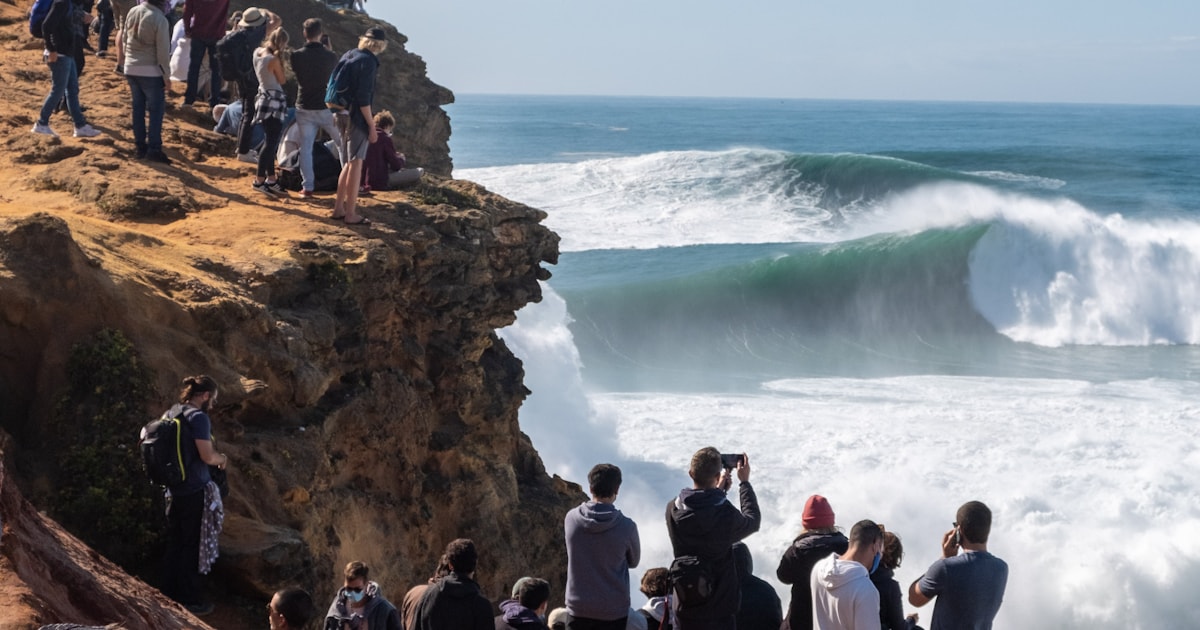
The giant waves at Praia do Norte happen when powerful Atlantic swells combine with the underwater Nazaré Canyon - a dramatic submarine valley that channels and amplifies wave energy. The biggest waves (20m+, occasionally much more) tend to arrive between November and February, though swells can push significant waves throughout the autumn and winter.
- Garrett McNamara surfed his record wave here in 2011 - since then the Nazaré Challenge (a WSL surf competition) runs in the October–March window
- How to know when big waves are coming: Local surf forecast sites (Windguru, MagicSeaweed, Surf-Forecast) will show Nazaré in the forecast a few days out when a major swell is building. The surf community tracks it obsessively
- What it's like in person: Even from the Sítio viewpoint hundreds of meters away, the noise of the waves is something you feel in your chest. When a big set comes through and a surfer drops in, the scale only becomes real when you watch - the surfer looks like a dot
- Crowds: When a major swell hits and word gets out, the Sítio viewpoint and the lighthouse road fill up fast. Arrive early if you want a front spot
Summer (June–September)
The sea is calmer, the weather is perfect, the main beach is busy but beautiful, and the town feels alive with visitors. No giant waves - but still a genuinely worthwhile trip. The Sítio views are dramatic regardless, the funicular is running, the seafood is excellent, and the beach is one of the most scenic in Portugal.
My take: If you can time it for a big swell day between November and February, the wave-watching experience is extraordinary and unlike anything else in Europe. But Nazaré in summer is still very much worth doing - it's just a different kind of day.
Getting from Lisbon to Nazaré
By Bus (Most Common Option Without a Car)
There is no direct train to Nazaré. The main public transport option is the Rede Expressos bus service from Lisbon's Sete Rios bus terminal.
- Departure: Sete Rios bus terminal, Lisbon (metro: Jardim Zoológico, blue line)
- Journey time: ~2 hours direct
- Price: ~€12–€15 each way
- Operator: Rede Expressos (rede-expressos.pt) - book online in advance, especially in summer
- Arrival point: The bus drops you in the center of Nazaré, about a 5-minute walk from the main beach
- Frequency: Several departures daily - check the schedule, as times vary. Not hourly
Important: Check the return bus times before you leave Lisbon so you know your options. The last bus back can be earlier than you'd expect, which shapes how long your afternoon can be.
By Car
Driving is the most flexible option, especially if you want to arrive early for wave-watching or combine Nazaré with nearby towns like Alcobaça (famous for its monastery, about 15 minutes from Nazaré).
- Route: A8 motorway north from Lisbon toward Leiria, then turn off toward Nazaré
- Journey time: ~1h 30min without traffic
- Tolls: ~€5–€7 each way on the A8
- Parking: There's paid parking near the main beach and in the Sítio. Arrive before 10am in summer to find a space easily
What to See and Do in Nazaré
1. Praia de Nazaré - The Main Beach
This is one of the widest beaches in Portugal - a massive arc of sand stretching for over 3km. In summer it fills up with umbrellas and sunbathers, but even then it doesn't feel overcrowded because there's just so much space. The seafront promenade runs the full length, lined with restaurants and cafés.
The sea at the main beach can have decent surf, but it's generally swimmable in summer. The waves are real though - not a calm, protected bay. Keep this in mind if you're bringing children or non-confident swimmers.
2. The Funicular (Elevador da Nazaré)
The funicular has been running since 1889, connecting A Praia (the beach town) with O Sítio (the cliff village) above. It's a short ride - about 2 minutes - but the view from the top as you ascend is memorable. This is non-negotiable on a Nazaré day trip.
- Price: €1.20 each way (pay on board)
- Operating hours: Varies by season - generally 7:30am to midnight in summer, shorter hours in winter
- Location: At the northern end of the main beach, in the center of town
- Tip: It can get a queue in peak summer season. Either go early (first thing in the morning) or wait for a slightly quieter window in the afternoon
3. O Sítio and the Clifftop Viewpoints
The main viewpoint in Sítio is right next to the top of the funicular - you step off and you're immediately looking down at the beach and the ocean. The scale is genuinely impressive. From here you can see the sweep of the bay, the rows of colored umbrellas below in summer, and on the far end, the cliffs stretching toward Praia do Norte.
Walk west along the clifftop path (it takes about 15 minutes) and you'll reach the lighthouse and the viewpoint over Praia do Norte - the big wave beach. Even in summer with small waves, the canyon geography is visible: watch how the swells approach from a distance and seem to stand up dramatically as they hit the shelf. In winter, this is where people gather with binoculars and cameras when a swell comes through.
- Miradouro do Suberco: One of the best viewpoints on the clifftop, with a sweeping view back over the main beach and town
- Forte de São Miguel Arcanjo: The small lighthouse fort at Praia do Norte, free to walk to, with the most dramatic view of the wave beach
- Ermida da Memória: A tiny pilgrimage chapel in Sítio with a story dating back to the 8th century - worth a look if you're interested in Portuguese religious history
4. Praia do Norte - The Big Wave Beach
Walk or drive 10 minutes north of Sítio along the coast and you reach the base of Praia do Norte - the actual beach where the famous surfing happens. In summer it's a calm, relatively empty beach with no swimming flags. In winter, it's barricaded off when serious swells arrive and the surf team is out.
Even without waves, it's worth visiting just to understand the geography. The beach is wider and wilder than the main beach, the cliffs above are dramatic, and you can see the lighthouse on the headland that overlooks the whole setup. Bring shoes rather than sandals - the path down can be rough.
5. The Dried Fish Market and Local Shops
One of the more distinctive things about Nazaré is how visible its fishing heritage still is. You'll see dried fish - especially dried octopus - hanging outside shops near the market, which is one of those things you don't expect and then can't stop photographing. The market area is near the center of the beach town.
The local dried octopus snacks are also actually delicious - intense, chewy, salty. Buy some from a market stall as a snack for the ride home.
Where to Eat in Nazaré
What to Order
- Caldeirada de peixe - the classic fish stew, hearty and warming, particularly good in autumn and winter when the fish are fatter
- Grilled fish by weight - ask what came in that morning. Dourada, robalo, and bream are common. Order it "na brasa" (grilled on charcoal) for the best version
- Polvo à lagareiro - baked octopus with olive oil and roasted potatoes. A Portuguese classic and always well-executed in fishing towns
- Percebes - barnacles if available. The Atlantic barnacles from this stretch of coast are excellent
- Dried octopus snacks - buy from a market stall rather than a tourist shop for the best price
Where to Sit
The seafront promenade has many restaurants and most are decent, but the tourist-facing ones on the main drag tend to charge a premium. Walk one or two streets back from the beach for better value. Sítio also has a couple of cafés and restaurants with views - eating up there at lunch, looking out over the cliff, is a legitimately special experience.
Full Day Itinerary
By Bus
- 7:30–8:00am - Bus from Sete Rios (book in advance)
- 9:30–10:00am - Arrive in Nazaré. Walk to the beach, have a coffee on the seafront
- 10:00am - Walk the promenade the length of the main beach
- 10:30am - Take the funicular up to Sítio (€1.20)
- 10:45am - Clifftop viewpoint, Miradouro do Suberco. Take your time here
- 11:15am - Walk west to the lighthouse and Praia do Norte viewpoint (15–20 minutes each way)
- 12:00pm - Return to Sítio, lunch at a café or restaurant up here
- 1:30pm - Funicular back down
- 2:00pm - Explore the dried fish market, browse local shops
- 2:30pm - Beach time on the main beach
- 4:30pm - Head to the bus terminal for the return journey to Lisbon
- 6:30–7:00pm - Back in Lisbon
By Car (More Flexible)
- 8:00am - Leave Lisbon
- 9:30am - Arrive Nazaré, park near Sítio and start at the top
- 9:45am - Clifftop viewpoints, lighthouse, Praia do Norte
- 11:00am - Take the funicular down to A Praia
- 11:15am - Coffee and pastel de nata on the seafront
- 11:45am - Market and dried fish shopping
- 12:30pm - Lunch at a seafood restaurant (order the caldeirada)
- 2:00pm - Beach time
- 3:30pm - Optional: drive to nearby Alcobaça (15 min) to see the monastery
- 5:00pm - Drive back to Lisbon
- 6:30pm - Arrive Lisbon
Practical Tips
- The beach is cold even in summer: The Atlantic water temperature at Nazaré rarely gets above 20°C even in August. It's swimmable but refreshingly cold - not the warm Med experience some people expect
- Wind is constant: Nazaré is genuinely windy for much of the year. Bring a light layer even in summer - on the clifftop in particular, it can be significantly cooler than on the beach below
- Big wave days require early arrival: If a major swell is forecast and you want to watch, the Sítio viewpoint and the Praia do Norte road get crowded fast. Be there before 9am on peak swell days
- Check weather before wave-watching trips: If conditions are dangerous (heavy rain, very high winds), the lighthouse and viewing areas may be closed for safety
- Alcobaça is 15 minutes away: The Mosteiro de Santa Maria de Alcobaça is one of Portugal's finest Gothic monasteries and a UNESCO site - well worth combining if you have the flexibility of a car
- Nazaré gets busy in summer: It's a well-known destination. Go early, have your lunch spot in mind, and enjoy the evening once the day-tripper crowds thin out
- Don't skip Sítio: I've met people who went to Nazaré and stayed on the beach without going up the funicular. This is a mistake. The view from the top transforms how you see the whole place
Is It Worth the 2-Hour Trip?
Yes - but it's a different kind of day trip than Cascais or Sesimbra. Nazaré is further and the journey requires more planning (no convenient train). But the experience is more dramatic and more distinctive.
The combination of the cliff geography, the funicular, the wide beach below, the fishing-village authenticity that Cascais lost long ago, and the genuinely surreal experience of watching big waves in winter - Nazaré earns its place as one of the most memorable Atlantic coast experiences you can have from Lisbon.
In winter, on a big swell day, it's one of the most extraordinary things I've seen in Portugal. In summer, it's a beautiful and slightly underrated beach town with much better seafood than most places closer to Lisbon. Either way, go.
You would also like
Day Trip: Lisbon to ?vora (Easy Itinerary + Transport Tips)
?vora is one of the best day trips from Lisbon for history lovers?Roman ruins, whitewashed streets, and Alentejo vibes. Here?s how to do it as a stress-free day trip.
Day Trip: Lisbon to Set?bal (Seafood, Views, and a Simple Plan)
Set?bal is an underrated day trip from Lisbon for seafood lovers, coastal scenery, and an easy local-city vibe. Here?s how to plan a relaxed day without overdoing it.
Day Trip: Lisbon to Sintra (How to Do It Without Stress)
Sintra is magical?but it can be chaotic if you arrive at the wrong time. Here?s the easiest way to plan a day trip from Lisbon: timing, transport, and a realistic itinerary.
Ready to explore Lisbon?
Download my complete Portugal Travel Planner with insider tips, neighborhood guides, restaurant recommendations, and practical checklists for your Lisbon adventure.
Download Free Planner