Tipping in Portugal: Restaurants, Uber, Tours, Hotels (What's Normal)
Portugal isn't a heavy tipping country. Here's what locals actually do in Lisbon - how much to tip (or not) in restaurants, cafés, ride-shares, tours, and hotels.
Jolie Dang
Founder, Jolie in Lisbon
Coming from Vietnam - where tipping is also not a fixed expectation - I found Portugal's tipping culture very natural to adapt to. Nobody stares at you if you don't tip. Nobody guilt-trips you with a prominently displayed 20% suggestion on a card reader. You tip when service is genuinely good, and that's that. Here's how it actually works.
The most important thing to understand first
In Portugal, service charge is legally included in the price of everything. When you see €18 for a main course, that already includes the waiter's wages and any service fee. There is no legal or cultural obligation to tip on top of that. Tipping is entirely a bonus - a way of saying "you were great, thank you" - not a subsidy for low wages the way it is in the US.
This matters because some American travelers arrive in Portugal still operating in US-tip mode and leave 20% everywhere out of habit or anxiety. You don't need to. Save your euros. A tip of 5–10% for good service is genuinely generous here.
Restaurants (sit-down)
At a proper sit-down restaurant, the Portuguese approach is simple: round up, or leave 5–10% if the service was genuinely attentive.
In practice, this looks like: your bill is €27.80, you leave €30. Or your bill is €52, you leave €55 or €57 if you were really happy. You're not doing a percentage calculation - you're just rounding to a satisfying number and leaving the coins.
At nicer restaurants in Chiado, Príncipe Real, or Belém - places with €15–20 mains and thoughtful service - I tip closer to 8–10% if the staff were attentive, remembered my preferences, or made the meal feel special. At a neighborhood tasca where you get a €9 lunch special and perfectly fine service, I leave whatever coins I have in my pocket.
Some tourist-facing restaurants in Baixa will put subtle pressure on you - a card reader that presents a 15% tip option by default, or a server who lingers meaningfully after bringing the bill. You are never obligated. Just click "no tip" or leave what you decide and don't feel bad about it.
The couvert: what it is and what it isn't
This is probably the single most confusing thing for first-time visitors to Portugal. You sit down at a restaurant and almost immediately, bread appears. Maybe olives. Maybe a small dish of butter or tuna paste or queijo fresco. You didn't order any of it, and you assume it's complimentary. It is not.
This is called the couvert, and it's a completely normal part of Portuguese restaurant culture. You'll be charged for it - typically €1.50–4 per person depending on the restaurant. It will appear as a line item on your bill.
You have every right to refuse it. Just say "não, obrigada" (if you're a woman) or "não, obrigado" (if you're a man) when it arrives, and they'll take it away and you won't be charged. It's not rude to refuse. Locals do it regularly if they're not hungry yet or watching their budget.
What the couvert is not: it's not a scam, it's not a surcharge for sitting at the restaurant, and it shouldn't make you tip less. It's essentially just starters you can opt into by accepting them. Think of it like a bread basket in France - except in Portugal they actually charge you.
Cafés and pastéis de nata
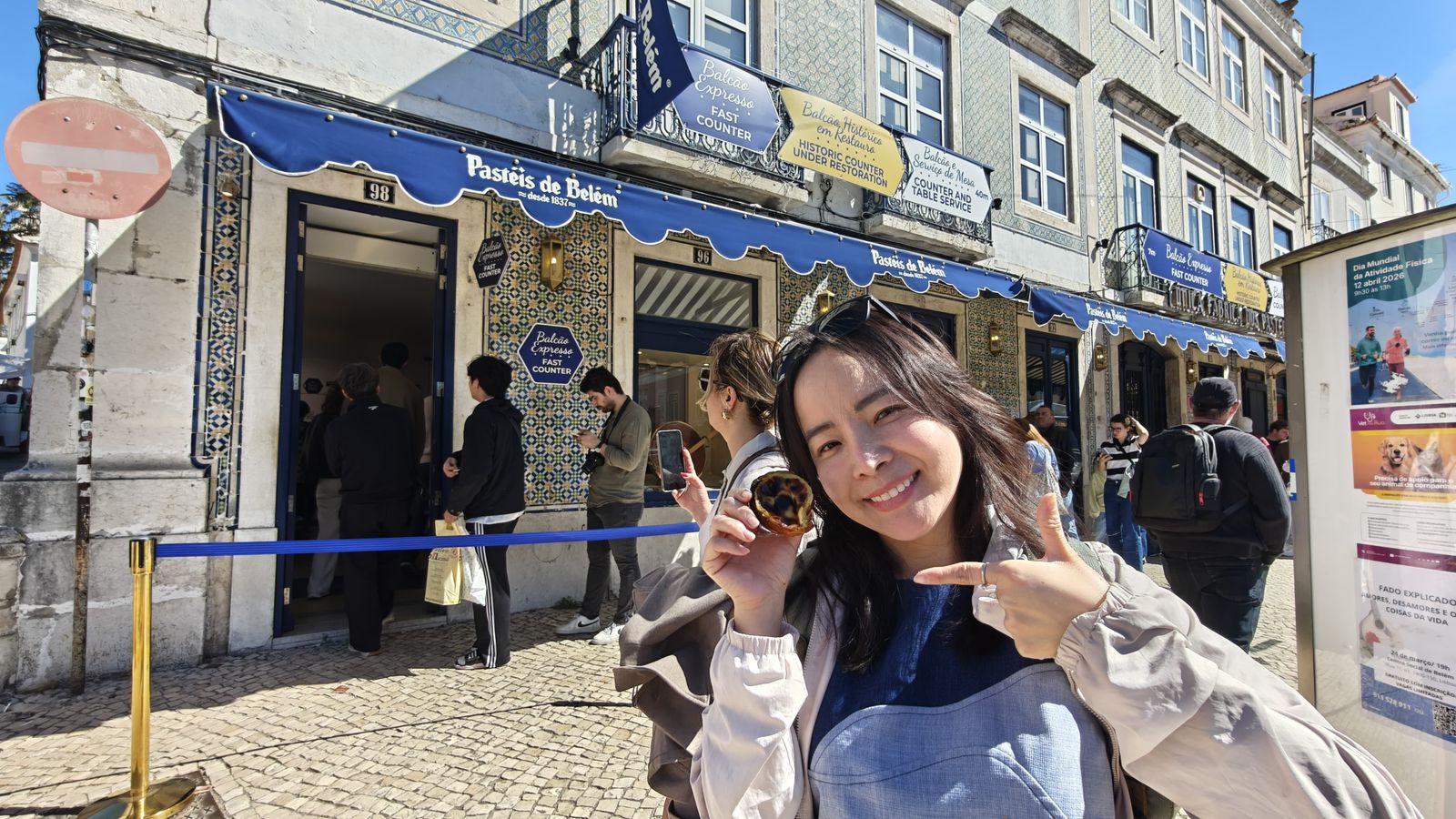
At a café counter - ordering a bica (espresso), a galão (milky coffee), and a couple of pastéis de nata - tipping is essentially not a thing. Most locals pay exactly what they owe and walk away. If you leave 20–50 cents rounding up on a €2.80 order, that's perfectly nice. Don't go tapping for a €2.80 coffee and then trying to add a 50-cent tip by card - it's weird and the cashier will probably look confused.
At sit-down café service - if someone brought your coffee and pastel to a table outside - leaving a coin or two is a kind gesture, but not expected. I usually leave €0.20–0.50 in these situations.
Bolt and Uber
Bolt and Uber both have in-app tipping options. Almost no locals use them. I've taken hundreds of Bolt rides in Lisbon and I tip in-app maybe once every ten rides, and only if the driver was genuinely exceptional (gave good recommendations, helped me with bags in the rain, waited patiently outside a narrow Alfama street).
If a driver helps you carry heavy luggage or is particularly helpful, €1–2 in cash is a genuinely appreciated gesture. They work hard and the rates Bolt/Uber take from drivers are not generous.
For a normal ride - just getting from A to B, driver was fine, nothing special - tipping is not expected and you shouldn't feel bad skipping it.
Yellow taxis
The Portuguese convention for taxis is to round up to the next euro. Your meter reads €9.40 - you hand over €10 and wave off the change. Your meter reads €13.80 - you leave €14 or €15 if you want to be generous.
If a driver was unpleasant, took an obviously longer route, or tried to negotiate a fixed price (never accept this), then you have zero obligation to tip at all. Pay the metered amount and leave.
Free walking tours
There are several excellent free walking tour operators in Lisbon - New Europe Tours, Lisbon Chill-Out Free Tours, and others that meet at Praça do Comércio or Rossio. The tours typically run 2–3 hours and cover the main historic neighborhoods.
I want to be clear about something: these tours are not actually free. The guides work entirely on tips. There is no salary. The "free" just means there's no upfront charge. A good guide is worth paying.
My recommendation:
- Minimum polite tip: €5 per person
- Standard for a good tour: €10–15 per person
- Exceptional tour, they went above and beyond: €20 per person
I've done a few of these tours when friends visit and I always tip at least €15 because the guides I've had were genuinely knowledgeable, funny, and worked a 3-hour shift in the Lisbon sun. That's worth paying for.
Paid tours (day trips, cooking classes, food tours)
For tours you've already paid for - a day trip to Sintra, a cooking class, a Douro Valley wine tour - tipping is entirely optional. The guide is already being paid. You tip if the experience was genuinely excellent and you want to express that.
A reasonable guide: €5–10 per person for a day trip with a great guide. Nothing if the tour was just fine. I never tip for a tour that felt rushed or low-effort, regardless of the price I paid for it.
Hotel housekeeping
This is much less codified in Portugal than in some countries. At a large hotel for a multi-night stay, leaving €1–2 per night in an envelope or on the pillow (clearly visible, so housekeeping knows it's intentional) is a kind gesture. It's not expected the way it might be in the US, but hotel workers in Lisbon work hard and are not highly paid.
At a small boutique hotel or pensão where the same person cleans your room every day, I tend to leave the tip at the end of my stay with a thank you. At larger chain hotels, I leave it daily because different staff may clean each day.
Hotel concierge and bellhop
If someone carries your bags to your room: €1–2 is standard. If the concierge solves something genuinely difficult - gets you a last-minute reservation at a booked restaurant, sources tickets to something sold out, arranges a late checkout under difficult circumstances - €5–10 is appropriate. For routine directions or printing a boarding pass, nothing is expected.
Food delivery (Glovo, Uber Eats)
Delivery workers in Lisbon are cycling up and down some seriously steep hills, often in the rain or summer heat. I always add €1–2 in the app when ordering delivery. It's a small amount that matters more to someone doing physical work in difficult conditions. Not tipping on delivery is a choice plenty of people make, but it's one I personally can't make.
Spas and massages
Not expected in Portugal, but a €5–10 tip for an exceptional massage or treatment is appreciated. For a standard spa service where everything was just fine, nothing is needed.
Hair salons
I go to a hairdresser in Principe Real who charges €45 for a cut and color refresh. I usually leave €5, occasionally €8 if she's done something particularly good with a difficult request. Rounding up by €2–5 is normal; anything more than 10% would be unusual.
Things that confuse tourists (and how to handle them)
The service charge that's already on the bill
Some restaurants - especially ones catering to tourists in high-traffic areas like Alfama and Bairro Alto - print a "service charge' or 'taxa de serviço' as a line item on the bill. This is sometimes a legitimate charge that was always going to appear. But occasionally, restaurants add it hoping you won't notice or challenge it.
The law in Portugal is clear: a restaurant cannot add a mandatory service charge on top of menu prices without disclosing this beforehand. If you see it and weren't told about it, you can politely ask to have it removed. Most will do so without drama.
Splitting the bill
Totally normal and accepted in Portugal - just ask for it before or during the meal rather than at the last moment when the single bill has already been printed. Say "podemos dividir a conta?" (can we split the bill?). Any server will accommodate this. Split bills don't affect tipping - tip your portion of the total if you want to.
Cash tips vs card tips
Cash tips go directly and immediately to the server or staff member. Card tips are processed through the restaurant's system and may be pooled, delayed, or handled differently. If you want the specific person who served you to receive your tip, leave cash on the table when you leave. I carry a small amount of coins for this reason.
My honest take on tipping in Portugal
I genuinely enjoy eating and going out in Portugal partly because of this. Back in the US - where I lived for a few years - I constantly felt anxiety around tipping. Is 18% enough? Should I be leaving 22%? The card reader is showing me a minimum of 18% and I feel judged for selecting "custom." It's exhausting.
In Portugal, I tip when I want to, because I want to. Nobody is waiting to judge my choice. Nobody will think less of me for paying exactly what the bill says and leaving. When I have a genuinely great meal with attentive service, it's a pleasure to leave something extra - because it feels like a choice, not a tax.
FAQ
Is it rude not to tip in Portugal?
No. Leaving no tip at a restaurant, café, or taxi is completely normal and will not offend anyone. Tipping is a voluntary bonus, not an expectation built into the economics of service workers' wages.
Do prices in Portugal include service?
Yes - by law, service is included in the prices you see on the menu. You are not expected to add it again.
Can I tip by card in Portuguese restaurants?
Sometimes - some restaurants' card readers allow you to add a tip before you confirm. But many don't, and cash is more direct anyway. I always keep a few euros in coins for tips rather than assuming card tipping is available.
How much should I tip a free walking tour guide in Lisbon?
€10–15 per person for a good 2–3 hour tour is my recommendation. €5 is the minimum polite. €20 if they were exceptional. Remember: this is their entire income for those three hours.
What is a couvert and do I have to pay for it?
Couvert is the bread, olives, or small starters that appear automatically on your table at many Portuguese restaurants. You do have to pay for it if you eat it (€1.50–4 per person typically). You can refuse it - just say "não, obrigado/a" when it arrives and it will be taken back without charge.
You would also like

Can You Drink the Tap Water in Lisbon? Everything You Need to Know
A practical answer to Lisbon tap water: safety, taste, filters, bottled water, and what to do if you have a sensitive stomach.

VAT Refunds in Portugal: How It Works (Eligibility, Steps, Timing, Pitfalls)
Buying something big in Portugal? Here?s the plain-English VAT refund process: who qualifies, what to ask for in-store, how to validate at the airport, and common mistakes that cost you the refund.
Ready to explore Lisbon?
Download my complete Portugal Travel Planner with insider tips, neighborhood guides, restaurant recommendations, and practical checklists for your Lisbon adventure.
Download Free Planner