How to Avoid Tourist Traps in Lisbon (Specific Examples + Better Alternatives)
Lisbon is amazing, but some experiences are overpriced or crowded for what you get. Here's how to spot common tourist traps - and what to do instead.
Jolie Dang
Founder, Jolie in Lisbon
The easiest way to avoid tourist traps in Lisbon is to optimize for timing (go early or late), distance (walk 5–10 minutes away from the main squares), and transparency (metered taxis, app pricing, or walking for free). Most "traps" in Lisbon aren't outright scams - they're just experiences designed for tourists rather than locals, priced accordingly.
Trap 1: Tram 28 as a tourist experience
Let me be clear about something: Tram 28 is a legitimate piece of public transport and it's genuinely useful for getting from Martim Moniz to Chiado or from Chiado to Campo de Ourique. The tram itself - a small, wooden, yellow rattling thing from what feels like 1930 - is charming.
But riding Tram 28 specifically "for the experience," as many travel blogs recommend, is where things go wrong. In summer (June–September), the tram is so packed with tourists taking photos of each other that it's physically uncomfortable. You're pressed against strangers, the windows are fogged, and you can barely see outside. Pickpockets specifically target Tram 28 because the crowding makes it easy - I've seen people lose phones and wallets on it.
The route passes through genuinely beautiful streets, but if you're packed inside a sardine can, you're not seeing them - you're photographing the person in front of you who's also taking a photo of the person in front of them.
What to do instead: Walk the same route. Start at the Sé cathedral in Alfama, walk up through the alleyways toward the Castle (Castelo de São Jorge), detour to Miradouro da Graça and Miradouro de Santa Luzia, then walk down to Chiado via the Escadinhas de São Cristóvão. You'll see everything the tram passes, plus things the tram doesn't stop for, and you'll actually experience the neighborhoods rather than viewing them through a window.
If you do want to ride the tram for the nostalgia of it, board at the Martim Moniz terminus (the official start of the line) early in the morning - before 9am on weekdays you'll often get a seat and the experience is actually lovely.
Trap 2: Restaurants near the main squares
The restaurants with hosts standing outside near Praça do Comércio, Rossio, and along the Rua Augusta pedestrian street are not necessarily bad - but they charge 40–60% more for food that is rarely better than what you'd find five minutes away. I've seen grilled sardines on tourist menus for €18–22. At a local tasca, the same dish is €8–12.
The tells: a host outside actively inviting you in, menus with photos of every dish, menus translated into six languages in the window, a "tourist menu" sign with a fixed price around €15–20 for three courses.
The worst offenders are the restaurants directly on the waterfront promenade near the Praça do Comércio. You're paying for the view of the Tagus, which is genuinely beautiful, but the food-to-price ratio is painful. A better option: buy a beer from a supermarket and sit on the steps of the Praça do Comércio itself, which has the same view for free.
What to do instead: Walk north from Rossio into the Mouraria or Intendente neighborhoods, or west into Chiado's side streets. Look for restaurants where the menu is written on a chalkboard, where the lunch specials are in Portuguese only, and where there are no hosts outside. These places exist in abundance - they just don't have prime tourist real estate.
Trap 3: Fixed-price airport rides
Outside the arrivals hall at Lisbon Airport, you'll encounter people in vests or with signs offering "fixed-price taxis" to the city center. Quotes I've seen ranged from €35 to €50 for a ride that costs €10–18 on the meter or app.
Legitimate licensed taxis in Lisbon are required to use the meter, and the ride from the airport to the city center (Baixa, Chiado, Alfama) typically costs €10–18 depending on traffic and luggage surcharge. The Uber and Bolt apps typically show €8–15 for the same route. The "fixed price" vendors are simply charging a premium for the convenience of not having to think about it.
What to do instead: Exit the arrivals hall, open Uber or Bolt, and request a pickup from the designated rideshare area (there are clear signs). Alternatively, take the Metro from the airport - the Red Line goes directly to downtown Lisbon for €1.55 and takes about 25 minutes to Baixa-Chiado station. The metro works perfectly well with a suitcase on wheels.
Trap 4: Overpriced tuk-tuks and "vintage" car tours
The electric tuk-tuks (three-wheeled vehicles) and vintage car tours are everywhere in Alfama and the historic center. Prices typically run €50–80 for a one-hour tour of the neighborhoods, and some go up to €100 for longer routes.
These tours aren't a scam exactly - they're legitimate businesses, the drivers are usually knowledgeable, and if you're mobility-limited or have small children, they make real sense. But for anyone who can walk, the same neighborhoods are more rewarding on foot at zero cost.
The problem isn't the tour itself - it's that the tuk-tuk keeps moving while the driver talks, which means you can't actually stop at anything interesting. Alfama is a place that rewards getting lost in its alleyways, not breezing through on a fixed route while someone narrates.
What to do instead: Do a free walking tour (see below) for the narrative context, then explore the neighborhoods on your own with that framework in place.
Trap 5: Tourist souvenir shops
The rooster statues (galos de Barcelos), azulejo-patterned magnets, and canned sardines in decorative tins are sold at every tourist shop in Alfama and Chiado. Many of these items are made in China - the "traditional" tiles are printed rather than hand-painted, the roosters are mass-produced, and the sardine tins (while delicious) are often identical to what you'd find in a Portuguese supermarket for a third of the price.
This doesn't mean you shouldn't buy souvenirs - but it's worth knowing the difference between genuine Portuguese craft and tourist-market product. A hand-painted azulejo tile from a Lisbon artisan costs more, but it's actually made here and will last forever.
What to do instead: For genuine Portuguese-made goods, go to A Vida Portuguesa(stores in Chiado at Rua Anchieta 11, and in Intendente). It's a curated shop that stocks traditional Portuguese products - soaps, textiles, ceramics, stationery - all actually made in Portugal. Prices are higher than the tourist shops but you're buying the real thing. The Intendente location is in a beautiful old Moorish-style building and worth visiting even if you're just browsing.
For canned fish, Conserveira de Lisboa (Rua dos Bacalhoeiros, near Alfama) is the legitimate version - a 100-year-old shop selling Portuguese tinned fish in beautifully designed vintage tins, at fair prices.
Trap 6: The "free" walking tour misunderstanding
Free walking tours operate in Lisbon and the content is genuinely good - knowledgeable guides, good routes, interesting historical context. I recommend doing one, especially on your first day.
But here's what "free" means: the business model is tips. The guide works for tips only. The expectation - established across the industry worldwide - is that you tip €10–20 per person at the end. This is entirely fair given the quality of what's on offer. It's not a scam. But if you go in thinking you'll pay nothing and walk away, you're both wrong (the guide made nothing from you) and you've misunderstood the deal.
What to do instead: Go on the free walking tour, enjoy it, and tip properly. Think of it as a €15 guided tour that you pay for based on satisfaction. That's a great deal for 2–3 hours of curated history and orientation. Alternatively, book a paid tour (€20–30) from a smaller operator if you prefer a guaranteed, prepaid arrangement.
Trap 7: Cold pastéis de nata at premium prices
A pastel de nata is €1.20–1.40 at a neighborhood pastelaria. In tourist areas - particularly in Alfama, around the Sé cathedral, and on Rua Augusta - it's not unusual to see them sold for €2.50–3.50 each, pre-made, sitting cold in a display case.
Temperature matters enormously with pastéis de nata. A cold nata is fine. A warm nata fresh from the oven is transcendent. The cold ones sitting in a touristy display case at triple the price are the worst possible version of the thing.
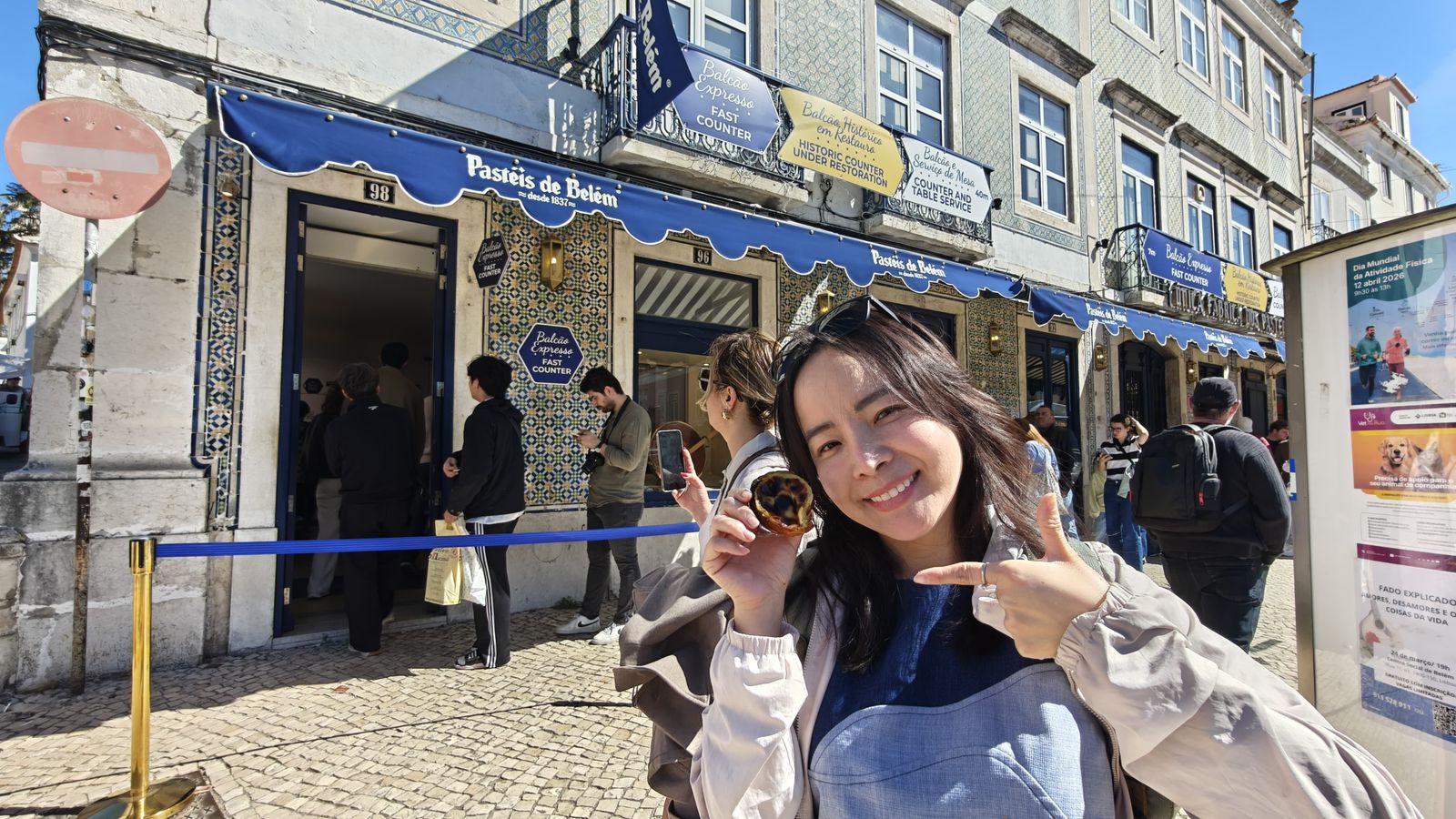
What to do instead: The benchmark is Pastéis de Belém (Rua de Belém 84–92) - the original, open since 1837, €1.40 warm and fresh, with a sprinkle of cinnamon and powdered sugar. Yes, there's a line. Yes, it's touristy. But it's also legitimately the best version of this pastry you can eat in Lisbon, at a fair price. For a neighborhood alternative, any local pastelaria that bakes their own is fine - look for one where there's an oven visible and the cases have fresh batches arriving throughout the day.
What's actually worth doing in tourist areas
I don't want this guide to leave you with the impression that tourist areas in Lisbon are universally bad. Some of the best things in the city are in the most visited places - you just need to know how to navigate them.
- Belém: Yes, it's overrun with tour buses in summer. But Pastéis de Belém is genuinely the best pastel de nata in the city, the Mosteiro dos Jerónimos (Jerónimos Monastery) is one of the most beautiful buildings in Portugal, the Torre de Belém is photogenic and genuinely historic, and the MAAT museum rooftop (free) has extraordinary views over the Tagus. Go early (9am) and you'll have most of it to yourself.
- Alfama: Crowded by 11am with tour groups and tuk-tuks. Before 10am it's a different world - locals walking to work, the sound of fado from open windows, the smell of bread from the bakeries. The neighborhood is genuinely authentic; the experience just depends heavily on what time you're there.
- Sintra: An hour by train, touristy beyond belief in summer, and also absolutely worth doing. The Palácio da Pena is genuinely extraordinary. Book tickets online in advance to skip the queue.
The lesson isn't "avoid tourist areas." It's: go early, know what you're paying for, walk a few blocks away to eat, and keep your phone in your front pocket. That's how you have the real Lisbon experience in the most visited parts of the city.
FAQ
Is Lisbon full of scams targeting tourists?
No, not really. Lisbon doesn't have the aggressive hustle of some other tourist cities. What it has is pricing that's calibrated to tourists (much higher) vs. pricing calibrated to locals (much lower), and a few situations where visitors pay premium prices for convenience or novelty. Staying aware of that gap is all you need.
Is the Tram 28 actually dangerous?
Not dangerous, but it's a prime pickpocket environment in summer. Keep your phone in a secure pocket (not a back pocket), hold your bag in front of you, and you'll be fine. The bigger issue is just that the summer experience on Tram 28 is often miserable due to crowds - not criminal.
How do I know if a restaurant is a tourist trap?
The clearest tell: someone standing outside trying to get you to come in. Locals never go to restaurants that have hosts outside. Other tells: plastic-covered menus with photos, "tourist menu" signs, and prices that look too round (€15, €20) rather than specific (€8.50, €12.50). When in doubt, look at who's eating inside - if it's all tourists, the food is probably priced for tourists.
You would also like

What Nobody Tells You About the Winter Weather in Lisbon (Humidity, Heating, What to Pack)
Lisbon winters feel colder than the numbers suggest. Humidity, drafty buildings, and limited central heating are the reality. Here is what to actually pack and expect.

10 Mistakes Tourists Make in Lisbon (And How to Avoid Them)
From Tram 28 traps to the wrong shoes for hills, here are the most common Lisbon mistakes I see visitors make?and quick fixes that instantly improve your trip.
Lisbon Packing List by Season (What to Wear + Shoes for Hills)
Lisbon?s weather is mild, but microclimates and hills change what ?comfortable? means. Here?s what to pack for Lisbon in spring, summer, fall, and winter?plus the shoes locals swear by.
Ready to explore Lisbon?
Download my complete Portugal Travel Planner with insider tips, neighborhood guides, restaurant recommendations, and practical checklists for your Lisbon adventure.
Download Free Planner